Finance Content Must Build Trust Without Hype
A Dhanur Finance News guide for creating financial education that respects risk, improves literacy, avoids reckless claims, and turns serious interest into qualified CRM conversations.
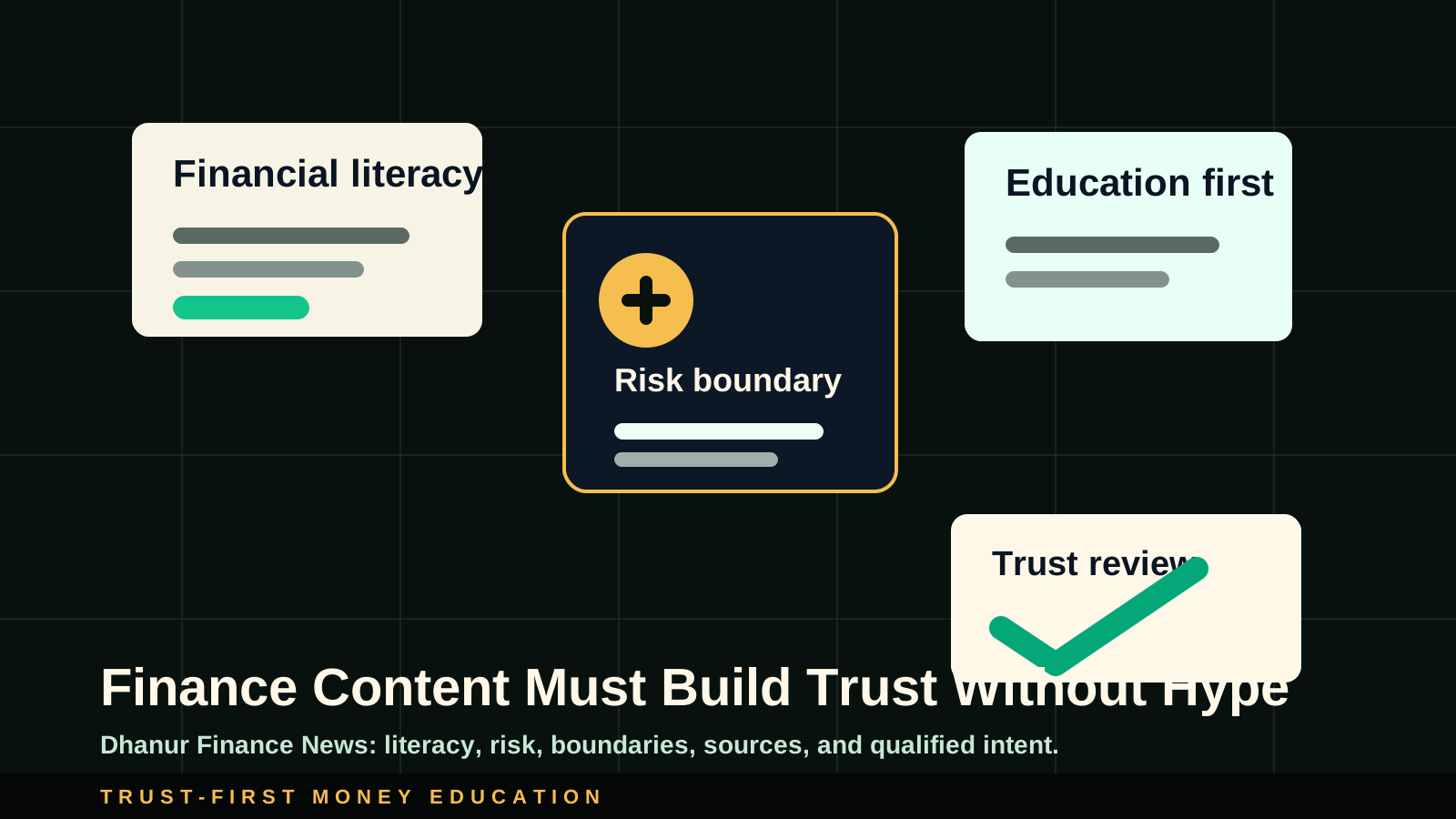
Finance is a trust category before it is a content category
Money content affects people's financial stability, so the quality bar is higher. A finance channel cannot behave like a gossip page. It must explain uncertainty, risk, assumptions, and suitability. The goal is not to create panic or greed. The goal is to help a reader understand enough to ask better questions and avoid careless decisions.
Financial literacy is a system
Good finance education should cover income, spending, debt, emergency funds, insurance, tax basics, investing, retirement, fraud awareness, and behavior. The National Strategy for Financial Education emphasizes content, capacity, community, communication, and collaboration. That is a useful lens for Dhanur Finance News: create content that improves capability, not just attention.
Separate education from advice
Public articles can explain how mutual funds work, why diversification matters, how compounding works, what risk means, or how fraud signals appear. They should not tell a specific reader what to buy, sell, borrow, or invest in. Personalized financial advice requires qualification, regulation, and context. The article should make that boundary visible.
The content pillars
Start with money basics, market explainers, personal finance systems, fintech tool literacy, risk education, scam awareness, and beginner investor education. Each pillar should have beginner, intermediate, and decision-stage content. A beginner learns vocabulary. An intermediate reader compares options. A decision-stage reader may need a checklist, course, or professional referral.
The lead form should protect the reader and the brand
Finance lead capture should avoid pretending that a generic form can solve a personal financial situation. It should ask for learning goal, topic, time horizon, general risk comfort, and whether the person wants educational resources or a human-reviewed call. The CRM should mark this as education-first, not advice-first.
YMYL SEO requires visible care
Google's guidance around helpful content and trust is especially important for topics that affect health, financial stability, or safety. Dhanur Finance News should show author identity, clear purpose, updated sources, disclaimers, and practical explanations. Articles should be written for readers first, not search engines first.
What to avoid
Avoid guaranteed-return language, price predictions without caveats, fear-based headlines, unverified tips, affiliate-first product pushing, and personalized recommendations. Avoid publishing complex topics without explaining assumptions. The brand should be slower than hype and faster than confusion.
References and further reading
Useful source base: NCFE and RBI-linked National Strategy for Financial Education; SEBI investor education materials; Google Search Central on helpful content and E-E-A-T; official regulator and exchange education pages where relevant. For current market news, use primary filings and official releases when possible.
FAQ: Can Dhanur Finance News recommend financial products?
It can educate and compare categories with clear criteria. Personalized product recommendations should require proper qualification, compliance review, and human approval.
FAQ: What is the best first course?
A beginner money operating system course is a strong first course because it teaches budgeting, debt, emergency funds, insurance, investing basics, and fraud awareness in sequence.
No approved reader comments yet.
Related reading
AI
Dhanur AI: The Web for AI Agents, The New Revolution
A deep Dhanur AI field guide to the next internet: websites that humans can trust, search engines can understand, and AI agents can safely read, compare, summarize, and prepare approved actions from.
AI Operations
How a Two-Person Company Can Run a Multi-Channel Business With AI Agents
A practical Dhanur AI operating model for running many YouTube channels, publications, products, courses, newsletters, leads, and partner workflows with a tiny human team and carefully bounded AI agents.