Startup Content Should Teach Operating Judgment, Not Just Motivation
A Dhanur Startups flagship guide for turning founder education into sharper decisions, better lead qualification, course pathways, and consulting-ready startup conversations.
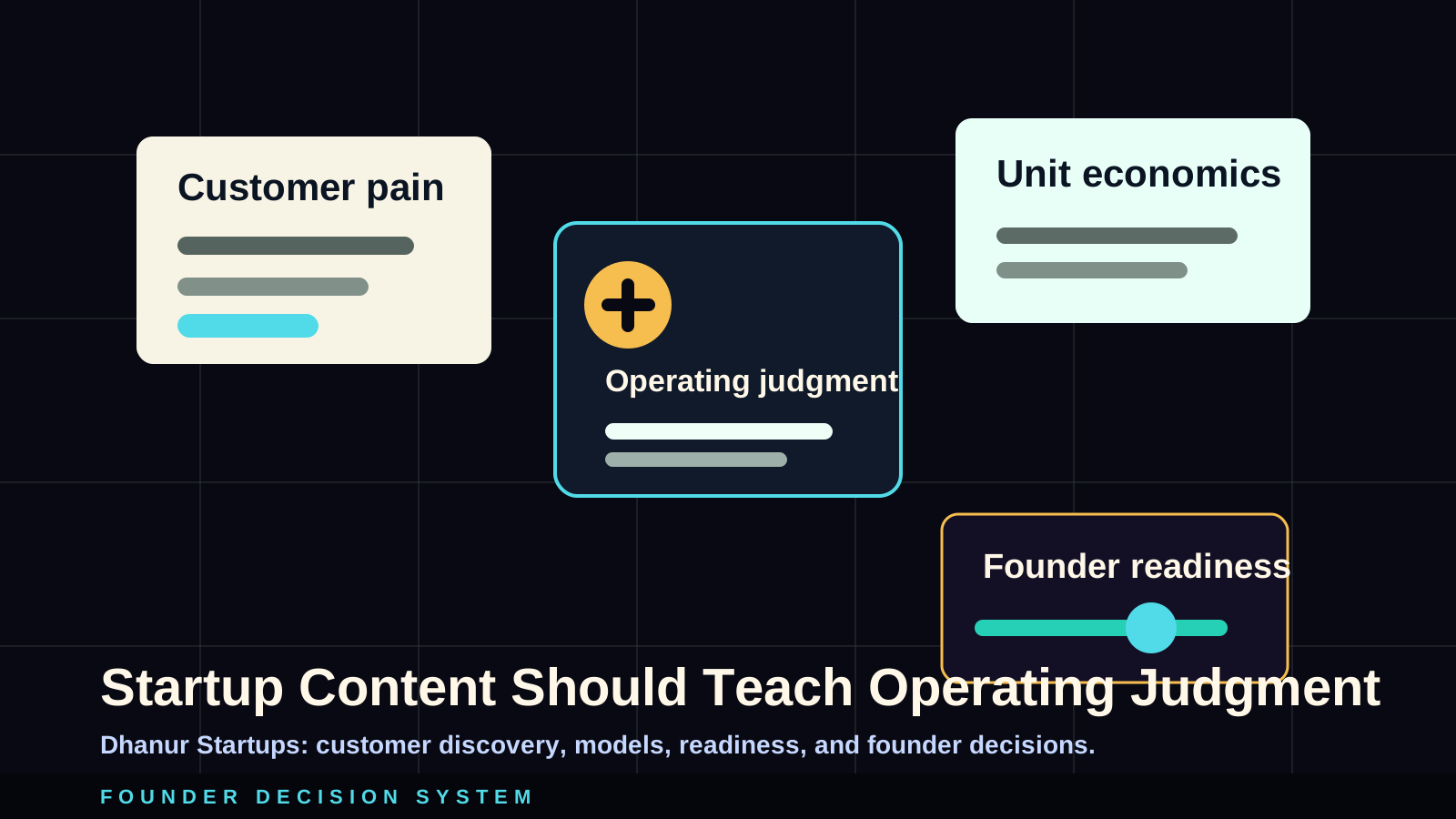
Startup content has too much adrenaline
Most startup content over-indexes on fundraising stories, unicorn headlines, founder motivation, and dramatic failure lessons. Those topics attract attention, but they do not always improve judgment. A founder needs sharper questions: who is the customer, what pain is urgent, what behavior proves demand, what costs scale with revenue, what distribution channel is realistic, and what can be tested this week. Dhanur Startups should become a channel for operating judgment.
The audience is not one audience
The startup audience contains students, first-time founders, side-hustle builders, funded operators, service businesses, SaaS builders, investors, and ecosystem partners. A good publication should label content by maturity. Beginner content explains business models and customer discovery. Intermediate content teaches pricing, hiring, funnels, metrics, and operations. Advanced content covers fundraising, governance, enterprise sales, and scale risks.
India's startup context is real and expanding
India's startup ecosystem has continued to expand through Startup India recognition and DPIIT-led programs. That scale creates opportunity, but it also creates noise. More startups means more founders need practical education, not just hype. Content should help founders understand eligibility, customer discovery, business model fit, compliance basics, and the difference between a startup, a small business, a project, and a venture-scale company.
Teach frameworks that lead to decisions
A strong founder article should end in an action. Map a customer segment. Interview five users. Calculate contribution margin. Compare three acquisition channels. Write the first landing page. Prepare a founder-readiness score. These actions turn content into a business asset because they produce leads with context. A founder who submits a readiness score is easier to help than a generic subscriber.
The first product should be a founder readiness system
Dhanur Startups should start with a free founder readiness scorecard, then a paid startup launch blueprint, then consulting or cohort-based guidance. The content should lead naturally into these offers. Articles should not shout buy now. They should prove the operating method and invite the founder into a structured next step.
What the dashboard should measure
Measure article reads, newsletter signups, scorecard completions, course interest, founder stage, business category, and consultation requests. The LAPS dashboard should show how many founders moved from content to lead, lead to appointment, appointment to presentation, and presentation to paid product or consulting.
What to avoid
Avoid glamorizing funding as the only path. Avoid generic hustle content. Avoid pretending every idea is venture-scale. Avoid legal, tax, or investment claims without qualification. Avoid articles that sound smart but do not help the founder make a decision. The brand should be useful enough that a founder bookmarks it before they need a service.
References and further reading
Useful source base: PIB and DPIIT updates on Startup India recognition; Startup India eligibility documentation; Google Search Central guidance on helpful content; McKinsey and Gartner research on AI and operating transformation. These references should support practical founder education, not become decorative citations.
FAQ: Should startup content focus on funding?
Funding is one topic, not the whole curriculum. Most founders first need customer clarity, distribution, pricing, delivery, compliance, and operating rhythm.
FAQ: What is the best first Dhanur Startups lead magnet?
A founder-readiness scorecard is the best first magnet because it captures idea stage, customer clarity, revenue status, urgency, and coaching fit.
No approved reader comments yet.
Related reading
AI
Dhanur AI: The Web for AI Agents, The New Revolution
A deep Dhanur AI field guide to the next internet: websites that humans can trust, search engines can understand, and AI agents can safely read, compare, summarize, and prepare approved actions from.
AI Operations
How a Two-Person Company Can Run a Multi-Channel Business With AI Agents
A practical Dhanur AI operating model for running many YouTube channels, publications, products, courses, newsletters, leads, and partner workflows with a tiny human team and carefully bounded AI agents.