Tech News Needs Context, Not Only Speed
A Dhanur Tech News guide for building useful tech coverage around AI tools, agentic systems, software shifts, buyer education, and product recommendations that stay trustworthy.
Speed is not enough anymore
Tech news moves quickly, but speed alone is fragile. A faster headline can be replaced by an even faster headline. A useful tech brand adds context: what changed, why it matters, who is affected, what risk exists, and what someone should do next. Dhanur Tech News should not become a feed of announcements. It should become a practical interpretation layer for AI tools, software, devices, platforms, and digital work.
AI and agentic systems need careful explanation
Analyst firms and technology companies are treating agentic AI as a major frontier, but the term is already being overused. A strong article should explain the difference between a chatbot, an automation, an agent, an agentic workflow, and a tool-connected system. It should also explain safety: approvals, permissions, logging, data access, and rollback. That is how Dhanur Tech News can be useful without becoming hype-driven.
Every article should answer five reader questions
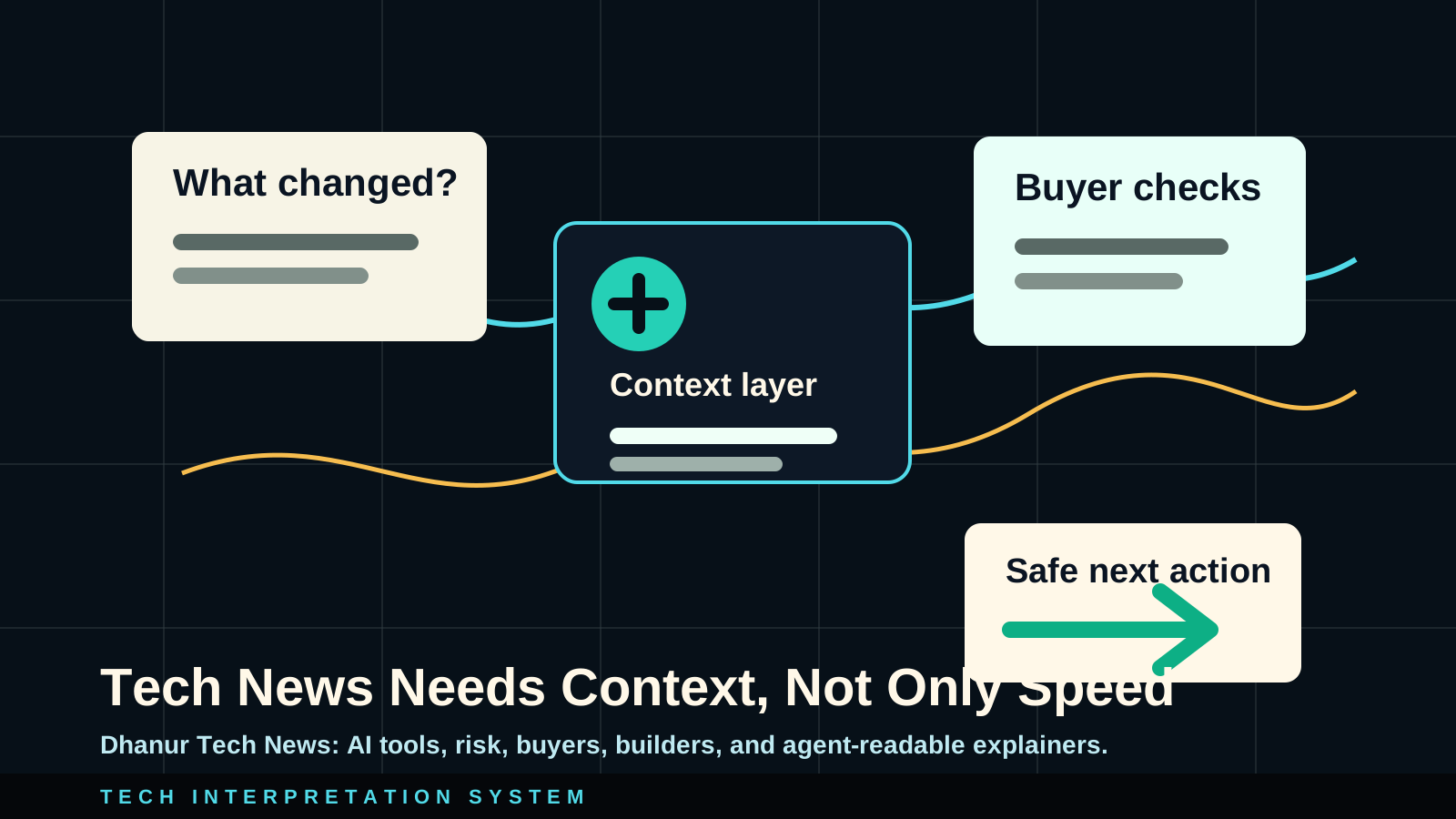
What happened? Why does it matter? Who should care? What should a buyer or builder check? What is the next safe action? This structure works for AI tools, SaaS updates, gadgets, cybersecurity warnings, creator tools, and productivity software. It also helps AI agents summarize the article accurately.
Product recommendations need a framework
Affiliate and store revenue should not push the brand into shallow rankings. A product recommendation should evaluate use case, price, setup effort, data risk, export options, support, integrations, and alternatives. If the article recommends an AI tool, it should say whether user data is involved and whether the tool is suitable for students, creators, founders, or teams.
The content system should connect to courses and store pages
A strong tech article can lead to a tool comparison, a template, a course lesson, or a product bundle. The page should preserve brand slug, article slug, product context, and UTM metadata. This lets the dashboard show which topics create store clicks, course interest, and newsletter subscribers.
What to avoid
Avoid copying press releases. Avoid tool hype without testing criteria. Avoid declaring winners too early. Avoid claims that AI will replace entire professions without nuance. Avoid burying security, privacy, or cost concerns. A trust-first tech brand should be able to say this is promising, but here is what to verify before you depend on it.
The first Dhanur Tech News format stack
Start with weekly explainers, tool reviews, buyer checklists, and AI workflow breakdowns. Each article should have a short-form video version, a blog version, a newsletter note, and a store or course path where relevant. The system should reward clarity, not just publishing volume.
References and further reading
Useful source base: Gartner research on strategic technology trends and agentic AI; McKinsey Technology Trends Outlook; OpenAI product notes on agentic systems; Google Search Central guidance on helpful content and structured data. Use sources to clarify context, not to pad articles.
FAQ: Should tech news articles be updated often?
Yes, when facts change. But do not change dates just to look fresh. Update because pricing, availability, policy, features, or risk has materially changed.
FAQ: What is the best lead magnet for Dhanur Tech News?
An AI tool evaluation checklist can capture buyer intent while helping readers compare tools more safely.
No approved reader comments yet.
Related reading
AI
Dhanur AI: The Web for AI Agents, The New Revolution
A deep Dhanur AI field guide to the next internet: websites that humans can trust, search engines can understand, and AI agents can safely read, compare, summarize, and prepare approved actions from.
AI Operations
How a Two-Person Company Can Run a Multi-Channel Business With AI Agents
A practical Dhanur AI operating model for running many YouTube channels, publications, products, courses, newsletters, leads, and partner workflows with a tiny human team and carefully bounded AI agents.